Eco-Agri Social Business

Greening agriculture and growing farmer income.

Background

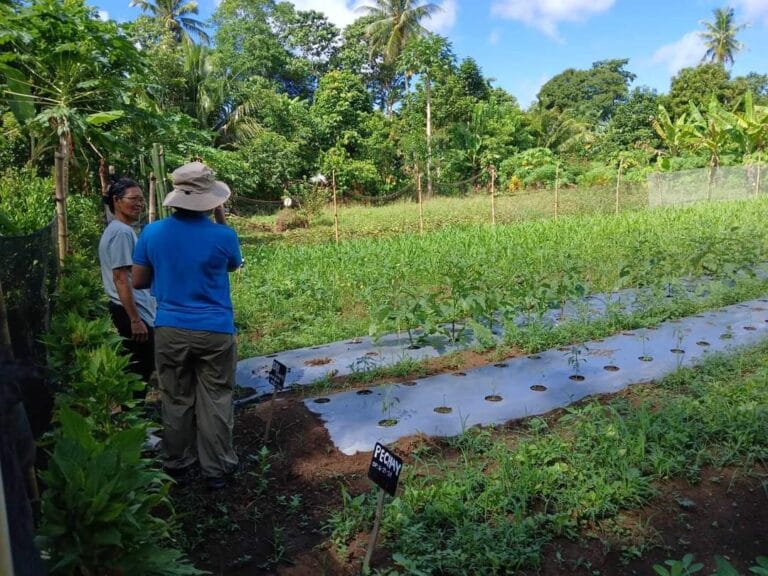
Dana Asia supports smallholder farmers to upscale small, family farms into viable agri businesses through a transition to sustainable, organic farming practices.

Farmers are given support to transition to sustainable farming methods through access to capital, training in organic farming practices, and support to achieve organic certification. Backed by Dana Asia’s Social Business Fund, eco-agri social business models help farmers increase their income while regenerating the land and reducing reliance on chemical inputs.

The challenge

Smallholder farmers in rural communities face many systemic barriers that prevent them from breaking out of poverty. Limited access to quality inputs, affordable financing, training, and markets keeps productivity low and income unstable. Many rely on traditional farming methods and are vulnerable to climate change, market volatility, and exploitative middlemen. Without support to upgrade their practices and connect to reliable buyers, farming remains a subsistence activity rather than a viable livelihood.
  • Limited access to finance
  • Environmental degredation
  • Limited financial sustainability

.

The solution

Eco-agri social business models can address these challenges by combining sustainable farming practices with inclusive value chains. Businesses provide smallholder farmers with access to technical training, organic or climate-smart inputs, affordable credit, and shared infrastructure to help improve productivity, reduce costs, and increase resilience to climate shocks. By aggregating production and connecting farmers to formal markets under fair trade terms, we eliminate middlemen and ensure farmers receive a larger share of the value. Profits are reinvested to scale the model, support more farmers, and build long-term food security in the region.
  • Organic farming
  • Increased yields
  • Resilient to climate change

Impact highlights

agri social business established.
sqm of farm area converted to organic farmland.
increase in farm income through organic farming methods.
organic vegetables produced per harvest cycle.

Why this matters

  • Eco-inclusive: Combines environmental sustainability with economic inclusion, building a resilient future for farmers and ecosystems.
  • High potential for replication: Eco agri social businesses can support farmers across many communities and regions.
  • Market-driven: Supports farmers in accessing organic markets and building profitable agri-businesses.
  • Long-term impact: Improves food security, soil health, and livelihoods through a circular, community-based solution.

Supports these UN Sustainable Development Goals

Support this work


The model in practice

Meet some of the entrepreneurs putting this model into practice. These case studies showcase real-world success, resilience, and the positive ripple effect of sustainable social impact.