Eco Stores

Empowering environmentally-conscious entrepreneurs to reduce plastic waste.
Background

Dana Asia’s Eco Store model was launched to address two pressing issues in low-income urban communities: a lack of sustainable livelihood opportunities for women and the growing problem of plastic waste.

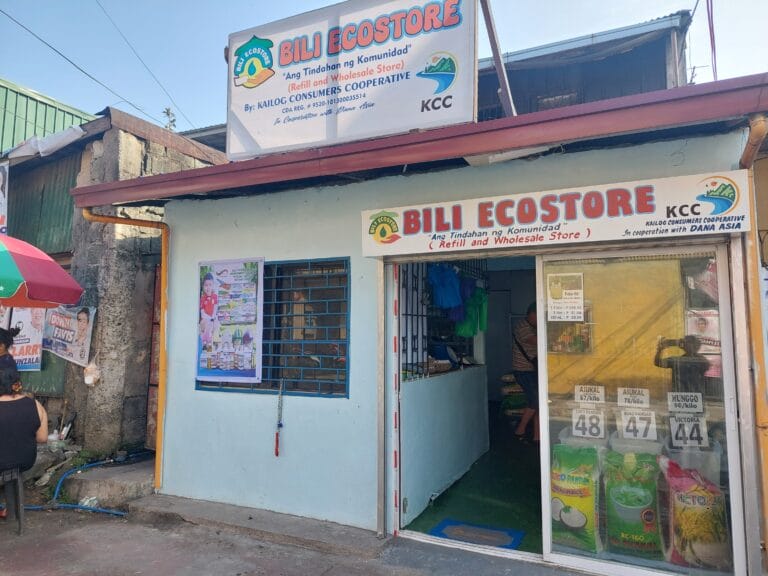
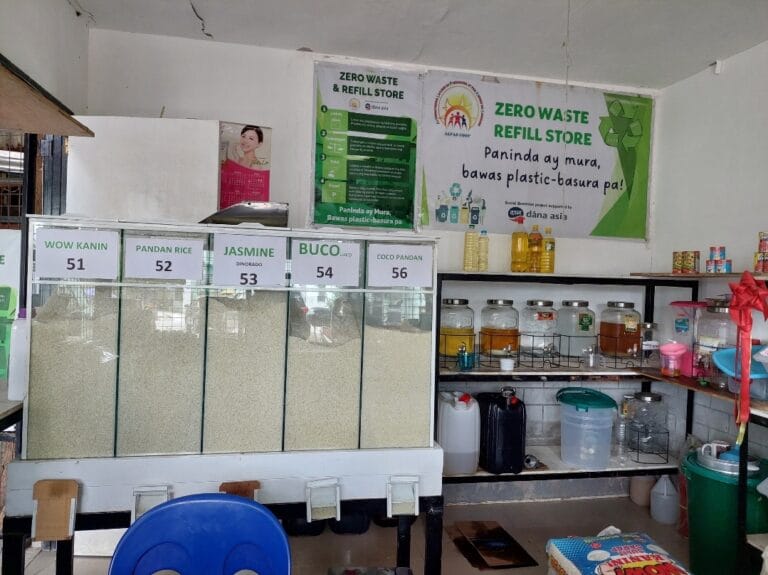
Developed in partnership with community-based organisations, eco stores are community-run zero-waste stores, providing affordable everyday goods without plastic packaging to individual consumers and other eco-conscious businesses. The model is guided by Dana Asia’s commitment to inclusive, environmentally responsible development.

The challenge

In 2023, the Philippines was ranked as the world’s top contributor of plastic waste entering the ocean. A major driver of this crisis is the widespread use of single-use plastic sachets, which are sold in tiny quantities through sari-sari stores to suit the daily purchasing habits of low-income households, a practice known as tingi culture. Plastic sachets are hard to recycle, and as result they pile up on streets and in waterways.
  • High levels of plastic waste
  • Polluted waterways
  • Purchasing single-use costs more

.

The solution

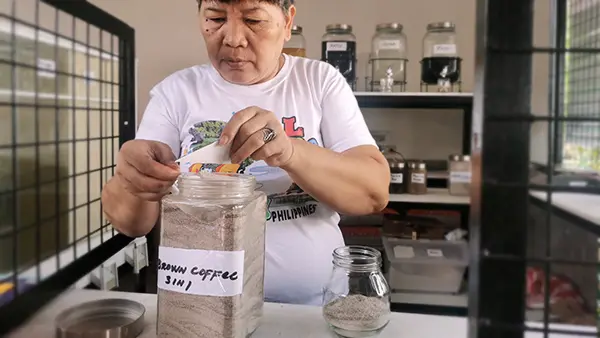
The Eco Store model is a circular solution that addresses both environmental and economic challenges. Eco store operators are trained in business operations, financial literacy, and zero-waste retailing to launch zero-waste stores that sell refillable products to individual consumers and as wholesalers for other eco-friendly businesses. Not only does this lower the amount of plastic being consumed by communities, but it also lowers the cost of basic goods through bulk refilling. The model promotes behavioural change by making eco-friendly options more accessible.
  • Reduces plastic waste
  • Lowers the cost of basic goods
  • Environmental advocacy

Impact highlights

eco stores launched.
of plastic waste avoided per year.
low-income consumers with access to affordable, eco-friendly products.
average household savings for customers buying refill products.

Why this matters

  • Scalable & replicable: Each successful eco store creates a blueprint for the next.
  • Tackles dual challenges: Simultaneously addresses environmental degradation and women’s economic inclusion.
  • Promotes sustainability: From refillable goods to local supply chains, Eco Stores model low-waste retail for urban communities.
  • Builds resilience: Entrepreneurs gain income, skills, and confidence, setting up their families and communities for long-term success.

Supports these UN Sustainable Development Goals

Support this work


The model in practice

Meet some of the entrepreneurs putting this model into practice. These case studies showcase real-world success, resilience, and the positive ripple effect of sustainable social impact.